 Back to Blog
 LifeCare Editorial Team
 December 30, 2025

Why medical billing is so hard for private practices
Running a private practice means you’re managing patient care and daily operations at the same time. That’s why medical billing can quickly feel like a second full-time job.
The hardest part is that problems usually start before a claim is even sent. Small intake mistakes, missed coverage checks, or incomplete notes lead to claim denials and repeated back-and-forth.
When those issues pile up, you see delays, more admin work, and unstable cash flow, even when the practice is busy.
That’s why many clinics move to a smoother RCM workflow, where front-desk steps, documentation, billing, and reporting stay connected—so issues are caught early.
If you want to see how this looks in a real private-practice setup, explore LifeCare Billing for Private Practices.
What is medical billing for private practices?
Medical billing for private practices is the process of submitting and tracking insurance claims so your practice gets paid for the care you provide.
It’s one part of Revenue Cycle Management (RCM), which includes the entire financial path—from the appointment being booked to the final payment being collected.
In practical terms, billing covers accurate patient details, insurance verification, correct coding, and sending clean claims on time.
It also includes payment posting, fixing rejections, handling appeals, and following up until the balance is resolved.
Finally, good billing includes reporting—so you can see denial reasons, A/R trends, and what’s slowing payments.
LifeCare supports private practices with an end-to-end RCM approach that includes billing, A/R support, denial follow-up, and clear reporting—built for modern workflows.
The complete medical billing workflow for private practices (RCM step-by-step)
Step 1: Patient scheduling and registration
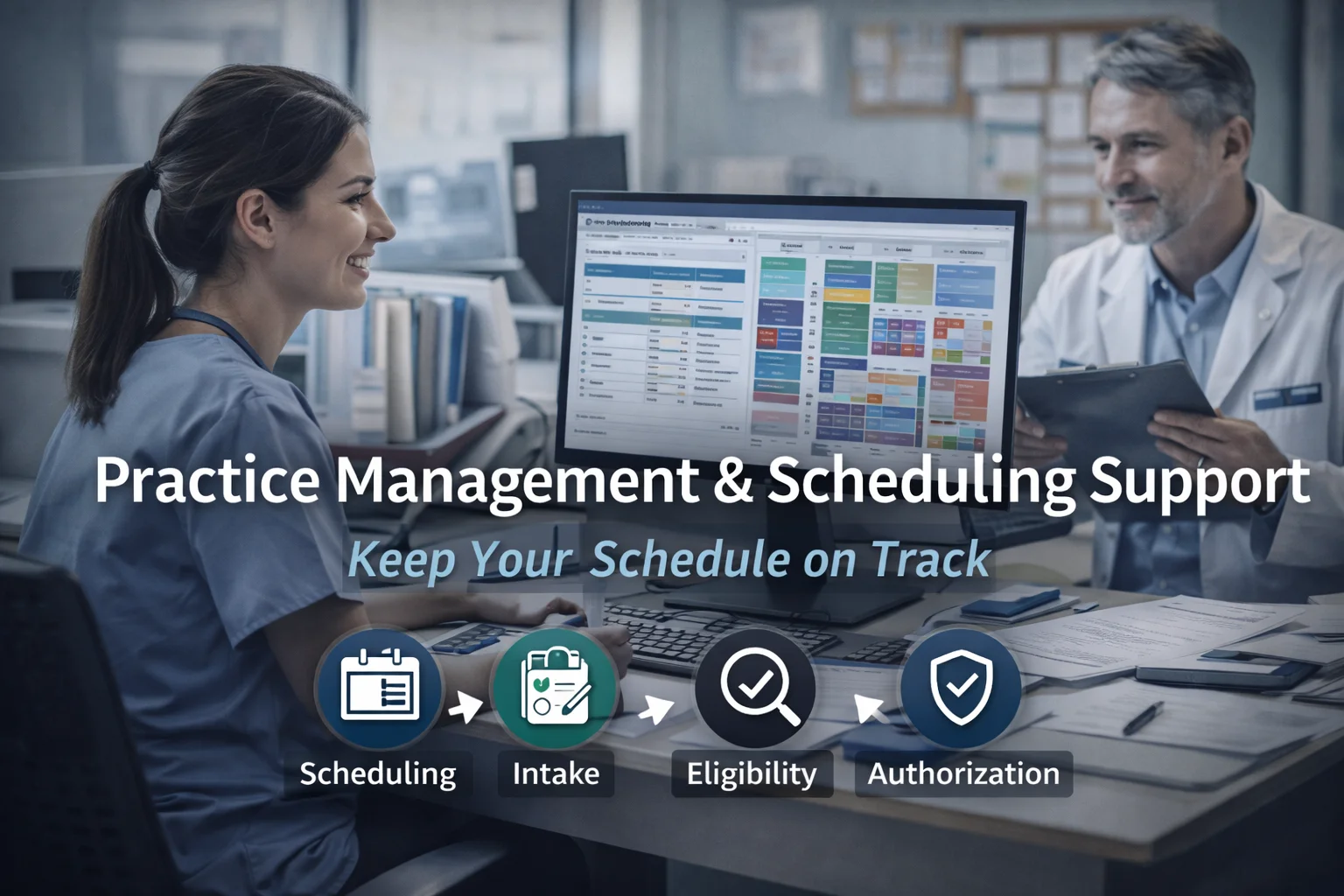
Everything starts with patient scheduling and clean registration. If the front desk captures the right details at the beginning, your claims move faster later. This step includes demographics, insurance info, guarantor details, and signed intake forms. LifeCare supports smoother scheduling flow with automated reminders in its private practice setup.
Step 2: Insurance eligibility verification
Before the visit is billed, insurance eligibility verification confirms the patient’s coverage and benefits. This reduces “surprise denials” caused by inactive plans, unmet deductibles, missing authorizations, or uncovered services. LifeCare’s workflow supports streamlined intake with verification-ready processes.
Step 3: Medical coding and documentation
After the visit, medical coding and documentation must match what happened clinically. Incomplete notes, wrong code selection, or missing specificity can lead to denials or underbilling. With EHR integration, LifeCare helps keep documentation aligned with billing needs.
Step 4: Claim submission
Next comes claim submission, where the goal is to send a clean claim the first time. Correct patient/payer data, accurate codes/modifiers, and required attachments reduce rejections and rework. LifeCare’s RCM approach focuses on end-to-end billing workflows that support cleaner submissions.
Step 5: Claim adjudication and payment posting
After submission, the payer processes the claim and sends an ERA/EOB. Accurate payment posting ensures your practice knows exactly what was paid, what was adjusted, what was denied, and what becomes patient responsibility. LifeCare highlights real-time billing reports to improve visibility at this stage.
Step 6: Denial management and appeals
When denials occur, a structured denial management and appeals process protects revenue. Track denial reasons, fix root causes, appeal quickly with documentation, and prevent repeats. LifeCare includes proactive denial analysis and resolution support as part of its RCM services.
Step 7: Accounts receivable (A/R) follow-up
Strong A/R follow-up is what prevents revenue from getting stuck. Weekly review, clear ownership, and quick corrections keep claims from aging into hard-to-collect balances. LifeCare includes complete A/R management as part of its private practice RCM model.
Step 8: Patient payment collection
After insurance pays, the remaining balance becomes patient responsibility. Improving patient payment collection requires clear statements, easy payment options, and transparent communication. LifeCare’s patient portal supports smoother billing management for patients.
Step 9: Reporting and analytics
Finally, reporting and analytics turns billing activity into decisions. By reviewing denial patterns, A/R aging, charge lag, and payer performance, private practices can fix problems early and improve month over month. LifeCare highlights practice analytics dashboards to support performance tracking.

Common billing challenges private practices face (and how LifeCare maps to them)
Limited staff and coverage gaps are one of the biggest problems in private practices. When one person is handling billing, a vacation, sick day, or staff turnover can slow down claims, follow-ups, and payments.
Repeat claim denials usually happen when denial reasons aren’t logged, reviewed, and fixed at the source. Without a system to track patterns, the same errors keep returning and the workload grows every month.
Technology gaps also create avoidable delays. When your EHR, intake forms, and billing tools don’t connect, staff end up doing manual entry, fixing missing fields, and correcting preventable mistakes.
Finally, lack of visibility makes everything harder. If you don’t have clear reporting, you only notice problems when A/R is already aging or cash flow is already tight.
That’s why LifeCare’s private practice solution is built around an integrated workflow—scheduling → intake → documentation → billing/payment—with security and analytics visibility to reduce admin burden and improve performance tracking.
In-house vs outsourced medical billing: what’s right for your practice?
In-house medical billing can be a good fit when you already have experienced staff, consistent follow-up habits, and reliable oversight. It works best when your team can manage denials, A/R, and reporting without gaps.
Outsourced medical billing often makes sense when billing tasks are pulling staff away from patients, denials and A/R are piling up, or cash flow feels inconsistent. Outsourcing can bring dedicated RCM focus, structured follow-up, and clearer reporting.
LifeCare supports private practices that want a more modern workflow by combining billing operations with visibility and support—so you can stay focused on patient care while the revenue cycle stays organized.
Frequently Asked Questions
What is Revenue Cycle Management (RCM) for private practices?▼
RCM is the complete process of getting paid—from patient scheduling and insurance verification to coding, claim submission, denial follow-up, patient billing, and reporting. For private practices, strong RCM means fewer delays, fewer denials, and more predictable cash flow.
Why do private practices get claim denials so often?▼
Most denials come from preventable issues like inaccurate patient information, eligibility problems, missing authorizations, coding/documentation mismatches, or delayed filing. A system that tracks denial reasons and fixes the root cause helps prevent the same denials from repeating.
What should a private practice track to know if billing is improving?▼
Focus on trends like denial reasons, A/R aging, charge lag (visit → claim submission), patient balance trends, and payer performance. If these numbers improve month to month, your billing workflow is getting healthier.
Is it better to keep billing in-house or outsource it?▼
In-house billing works when you have experienced staff, consistent follow-up, and strong reporting. Outsourcing is often better when denials and A/R consume staff time, cash flow feels inconsistent, or you need dedicated RCM expertise and clearer performance visibility.
How does LifeCare Billing help private practices with medical billing?▼
LifeCare Billing supports private practices with an integrated RCM model that includes scheduling support, eligibility and intake workflows, EHR integration, claims processing, denial management, A/R follow-up, patient payment support, and real-time reporting—so your team spends less time on rework and more time on patient care.