 Back to Blog
 LifeCare Editorial Team
 December 28, 2025

How to Start a Telehealth Business in 2026: A Complete Guide for New York Entrepreneurs
The healthcare landscape has fundamentally transformed, and telehealth has emerged as a cornerstone of modern medical care. If you're considering launching a virtual healthcare business in New York, you're entering the market at an opportune moment. The telehealth industry is experiencing unprecedented growth, with millions of patients now preferring remote patient care over traditional visits.
In 2026, starting a telemedicine practice NYC offers enormous potential. The convergence of advanced digital health technology, widespread patient acceptance, and supportive regulatory frameworks has created ideal conditions. New York State has embraced telehealth services New York City residents can access easily, making it one of the most promising markets in the country.
This comprehensive telehealth startup guide New York will walk you through essential steps—from understanding telemedicine regulations New York State enforces to selecting HIPAA compliant telehealth software for how to start a telehealth business in 2026.
Understand the Telehealth Market in New York
Before launching your virtual healthcare business New York, understand the market dynamics. New York represents one of the largest healthcare markets in the United States, with NYC serving over 8 million potential patients.
Demand for online doctor consultation business services has skyrocketed across all boroughs. From telehealth business Brooklyn communities to telemedicine services Queens NY residents rely on, virtual healthcare Bronx neighborhoods, telehealth clinics Manhattan professionals operate, and telemedicine Staten Island providers demonstrate widespread adoption.
New York State has established progressive telehealth reimbursement policies supporting virtual care delivery. Medicaid covers telehealth services when practitioners are properly licensed and credentialed. According to the state health department, practitioners must maintain appropriate licensing to receive reimbursement for services delivered to New York residents.
The competitive landscape includes established players like Zocdoc and Ro, both NYC-based companies that have demonstrated the viability of the telemedicine business setup New York model. Understanding competitors helps identify gaps and opportunities for your telehealth business New York venture.
Beyond NYC, there's growing demand in surrounding areas including telehealth services Long Island, telemedicine providers Yonkers NY, and the telehealth startup New Jersey near NYC market. At Life Care Billing, we've observed the entire Tri-State region needs innovative virtual healthcare services in New York City and beyond.
Choose Your Telehealth Niche
Selecting the right niche is critical when planning your telemedicine startup. Focusing on a specific area allows you to build expertise and stand out in New York's competitive market.
Consider these popular niches:
Primary Care: Many patients need quick access for common ailments, prescription refills, or health questions through virtual medical consultations.
Mental Health Services: The demand for accessible mental health support has never been higher. Teletherapy services address critical needs while working well virtually.ervices
Dermatology: Visual assessments make dermatology well-suited for telemedicine, allowing patients to share photos of skin conditions easily.
Chronic Disease Management: Patients with diabetes or hypertension benefit from regular monitoring. Telemedicine practice management systems can integrate remote monitoring devices.
Specialist Consultations: Second opinions and expert consultations represent valuable niches, dramatically reducing wait times for patients.
When choosing your niche for your start telemedicine practice NYC plan, consider your background and patient demand. A focused approach for telehealth business for small clinics NYC helps you develop specialized expertise and build reputation within that healthcare segment.
Legal & Regulatory Requirements
Navigating the legal landscape is complex but essential for your virtual healthcare services in New York City. Getting foundations right protects your business and ensures legal operation.
Business Structure
Choose the right business entity for your telehealth company registration New York:
Limited Liability Company (LLC): Provides personal liability protection with operational flexibility for non-clinical telehealth companies.
Professional Limited Liability Company (PLLC): Required in New York for businesses providing professional medical services.
Professional Corporation (PC): Traditional structure used by medical practices for decades.
Licensing Requirements
For your start online medical practice in New York, licensing is critical. You must be licensed in the state where your patient is located:
- Providers must hold valid New York State medical licenses to treat patients in New York
- Telehealth licensing requirements New York mandates equal traditional in-person practice standards
- Plans to serve surrounding states require additional licenses in those jurisdictions
Understanding telemedicine license requirements New York State enforces is fundamental to legal operation.
HIPAA & Compliance
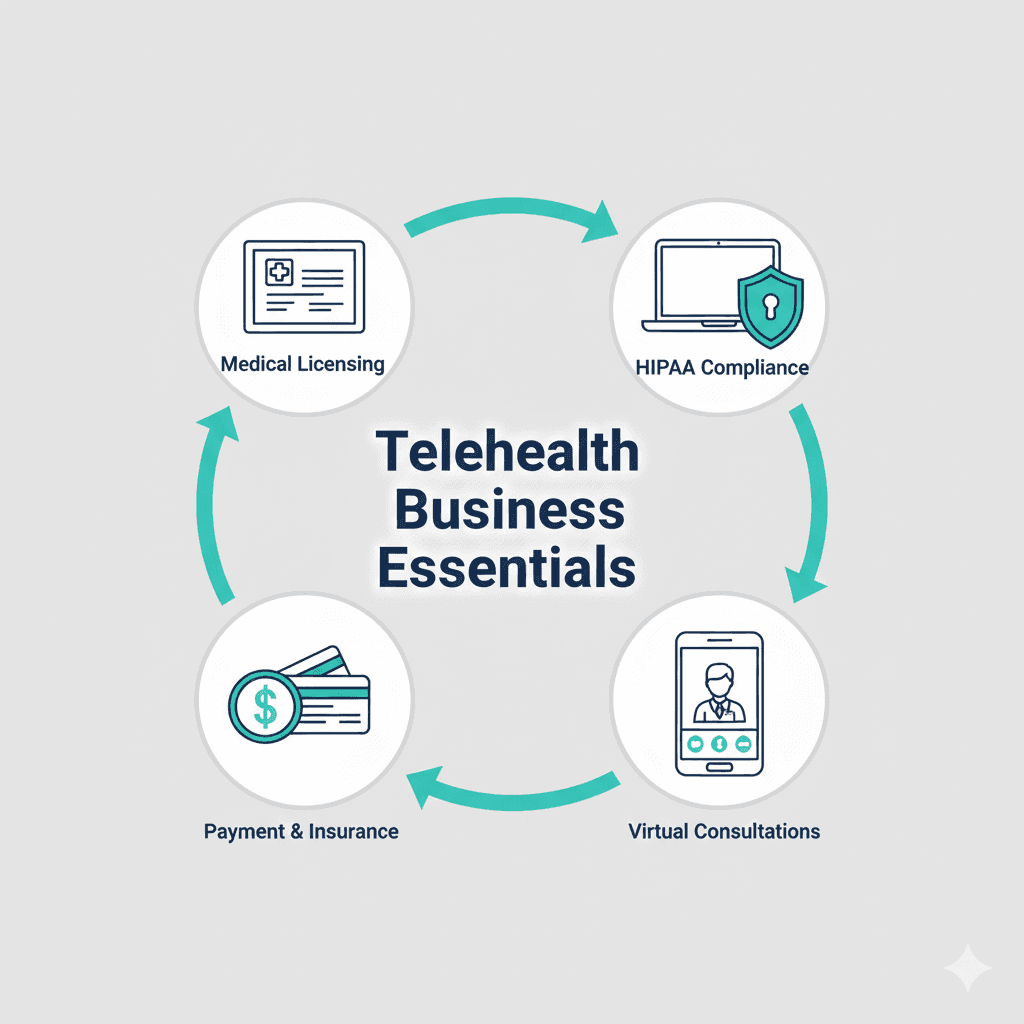
Healthcare compliance is non-negotiable. Your HIPAA compliant telehealth platform New York must include:
Secure Video Consultations: End-to-end encryption meeting HIPAA technical safeguards is required.
Business Associate Agreements (BAAs): Any vendor handling protected health information must sign BAAs.
Data Security Measures: Implement encryption, access controls, audit logs, and breach notification procedures to ensure patient data privacy.
At Life Care Billing, we emphasize that healthcare startups must build compliance into their foundation. Investing in proper healthcare compliance infrastructure from day one protects both patients and your business.
Create a Business Plan
Every successful telehealth business begins with a solid plan addressing your mission, target audience in the NYC and Tri-State region, and revenue strategy.
Your telehealth business model determines revenue generation:
Subscription Model: Patients pay monthly fees for consultations, creating predictable revenue.
Pay-Per-Visit: Patients pay per consultation—easy to understand and manage.
Insurance Billing: Accept insurance and bill carriers directly, expanding your patient base significantly.
Hybrid Model: Combine approaches for maximum flexibility.
Understanding telemedicine startup costs is essential:
- Technology platform development or licensing fees
- HIPAA compliant telehealth software subscriptions
- Provider salaries or contractor fees
- Insurance and malpractice coverage
- Marketing and patient acquisition costs
- Legal and compliance expenses
Create realistic projections for patient volume, revenue, and expenses. Understanding your path to profitability helps you make informed decisions about funding needs and growth pace for your telehealth startup requirements in NYC.
Choose the Right Technology Platform
Your technology infrastructure is the backbone of your telehealth services. For entrepreneurs learning how to start a telehealth business in 2026, the technology decision is consequential.
Essential components for telehealth platform development include:
Secure Video System: HIPAA-compliant video technology with reliable, high-quality connections.
Electronic Health Records (EHR): Cloud-based healthcare systems for documenting patient encounters and maintaining medical histories.
E-Prescribing Capability: Integration for online prescription services allowing providers to send prescriptions directly to pharmacies.
Scheduling Management: Easy appointment booking with automated reminders.
Payment Processing: Secure systems with medical billing integration for collecting payments.
You face a decision: build custom or use existing solutions. Custom telehealth platform development offers complete control but requires significant investment ($100,000-$500,000+). White-label solutions provide faster, more affordable launches through monthly subscriptions ($100-$500 per provider).
For most telemedicine solutions for New York providers starting out, reputable white-label solutions make more sense. You can transition to custom platforms later as you grow and your specific needs become clearer.
Provider Network & Staffing
Your telehealth business is only as strong as the healthcare professionals delivering care. Building a qualified, licensed, and credentialed provider network is essential.
Consider these staffing options:
Full-Time Employees: Offers most control over scheduling and quality but higher costs.
Independent Contractors: Provides scalability and lower overhead with flexible scheduling.
Partnership Models: Partnering with existing practices provides access to established networks.
Every provider must meet stringent requirements:
- Current, unrestricted medical license in New York State
- Appropriate malpractice insurance
- Completion of insurance credentialing
- Understanding of HIPAA requirements and patient data privacy
Insurance credentialing deserves special attention. To receive reimbursement, providers must be credentialed—a process taking 90-120 days. Many businesses partner with services like Life Care Billing to navigate this complex process efficiently.
Set Up Payments & Insurance
Your payment structure impacts both patient access and revenue potential. The telehealth business near Brooklyn Queens Bronx market includes diverse populations, so offering multiple payment options maximizes reach.
Direct Pay Model: Accepting credit cards or digital payment platforms provides immediate revenue without insurance billing complexity.
Insurance Reimbursement: Accepting insurance expands your patient base dramatically. New York has comprehensive telehealth coverage mandates requiring insurers to cover telehealth services at the same rate as in-person visits for many service types.
Medicaid in New York covers telehealth services when certain conditions are met. Commercial insurers also typically cover virtual consultations, though specific requirements vary.
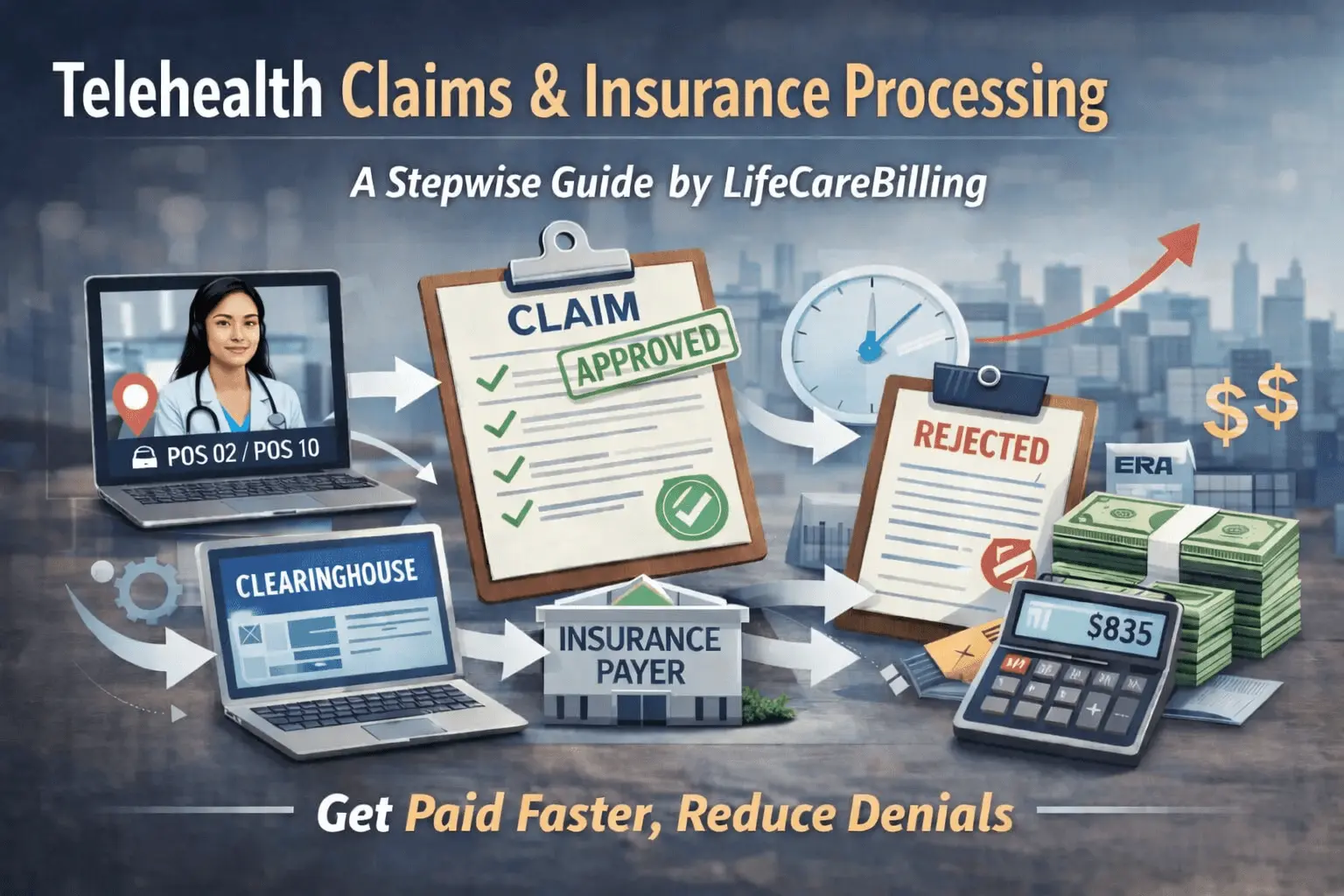
Medical billing integration is essential for managing the insurance process efficiently, including:
- Verifying patient insurance eligibility before appointments
- Generating accurate claims with proper coding
- Tracking claims through the payment cycle
- Managing patient balances and collections
At Life Care Billing, we work with telehealth businesses throughout New York to streamline the revenue cycle and ensure proper reimbursement.
Launch & Iterate
After planning and building, you're ready to launch. Successful entrepreneurs use a deliberate, measured approach prioritizing learning and refinement.
Consider a soft launch strategy with beta users who can test your platform in real-world conditions. This allows you to identify technical glitches, refine clinical workflows, and gather feedback before going fully public.
Track key performance indicators (KPIs) from day one:
Patient Acquisition: New registrations, acquisition sources, cost per patient, conversion rates
Patient Engagement: Booking rates, no-show rates, repeat visit rates, satisfaction scores
Financial Metrics: Revenue per patient, collection rates, average reimbursement, operating costs
Use this data to iterate continuously. Patient retention is especially critical in telehealth where switching costs are low. Focus on delivering exceptional experiences that make patients want to return and recommend your service.
Scaling Tips
Once you've established product-market fit, begin thinking about growth. Telemedicine scalability requires careful planning to maintain quality while expanding reach.
Geographic Expansion: After establishing presence in New York, consider neighboring states like New Jersey and Connecticut. Plan expansion methodically with proper licensing and administrative infrastructure.
Service Expansion: Adding clinical specialties or service types grows revenue. Each expansion should align with market demand and organizational capabilities.
Telehealth Product Differentiation: Identify what makes your service unique—whether specialized expertise, exceptional patient experience, or focus on underserved populations.
Strategic Partnerships: Form relationships with health systems, insurance carriers, and employers that can provide patient volume at scale.
Throughout your growth journey, never lose sight of delivering accessible, high-quality healthcare to patients who need it.
Closing Summary
Starting a telehealth business in 2026 represents an exciting opportunity in New York. The journey involves understanding your market, navigating legal requirements, creating a solid business plan, selecting the right technology, building your provider network, establishing payment systems, marketing effectively, and scaling strategically.
Success requires patience, persistence, and continuous learning. But the rewards can be substantial—expanding healthcare access while building a business that makes a genuine difference.
For aspiring telehealth founders in New York, the time to start is now. Whether establishing a virtual healthcare business serving the five boroughs or building a telemedicine practice spanning the region, your first step begins today.
At Life Care Billing, we support healthcare entrepreneurs throughout their journey, providing expertise in medical billing, credentialing, and revenue cycle management so you can focus on delivering excellent care.